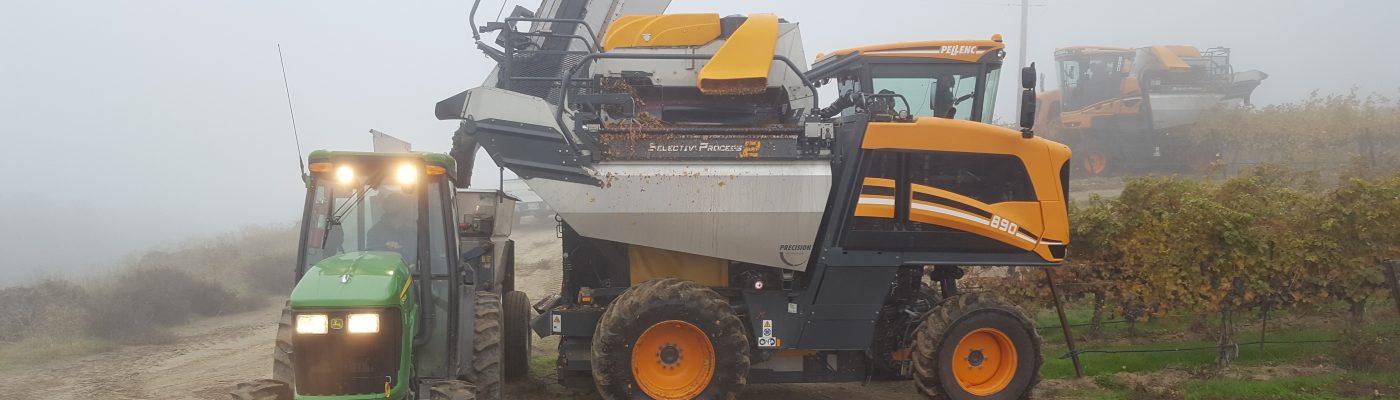
The weather in 2019 was fairly decent. Unfortunately, it ran out of steam and we did not get enough of the heat units we really needed towards the end of the season to finish of the fruit in the way it has in most recent seasons past. Brix numbers were lower than usual, and while these numbers are low by today’s standards, they are by no means low traditionally. The season resulted in reds with sugars peaking at 24 brix and a not too uncommon number of 23 to 23.5 brix. Many winemakers, especially old dogs in the game “get it.” From what I have been told being a farmer and not a winemaker, is that lower brix result in expressions of finesse. Therefore, it takes a more careful and dedicated approach to making a successful wine. Many over ripe fruit and high alcohol wines can just hide a lot of flaws or potentially lazy wine making under the heat. Personally, I am all for harvests that are determined not solely on numbers, but also on flavor profiles. I enjoy low alcohol finesse wines rather than an over-boozed, over-oaked, fruit bomb. To be far those wines do have their place and time, and if that is what is driving the market then that will be what is made.
We (Idaho as well as the PNW) had a few fall frost events that affected harvest. The vineyards I work for as well as my consulting clients were all at mature brix before the frost hit. Unfortunately, from the farmers rumor mills across the PNW this was not the case for everyone. I heard cases of fruit left on the vine because it did not reach maturity in time. Some folks waited until after the frost for dehydration to set in and raise brix because they just had to make due with what they had. Another thing that I heard was that folks up in Washington had fruit rejected and left on the vine for what is being called frost taint. Frost taint is something that is supposed to leave a floral or rose hip taint in reds, but typically not whites. It appears to be due to the dried up leaf material that froze out and ends up in the wine must. Green and therefore live leaves do not appear to leave any “frost taint.” Obviously, sound research and experimentation need to be performed to quantify and thoroughly explain what this frost taint is all about. I have linked to the Good Fruit Grower for further explanation of frost taint.
 Cragin Viticulture